Wednesday, September 23, 2009

Reclaiming the Spiritual Through Wilderness

Wallace Stegner is the most important voice in the conservation community. His words, decades after they were written and years after he died, still resonate. One of his principle arguments for conservation, written in his beautiful prose, was that wilderness was necessary for us spiritually. He wrote, in his Wilderness Letter:
We need to demonstrate our acceptance of the natural world, including ourselves; we need the spiritual refreshment that being natural can produce. And one of the best places for us to get that is in the wilderness where the fun houses, the bulldozers, and the pavement of our civilization are shut out.
Stegner also quotes American writer Sherwood Anderson concerning the positive effects wilderness has on our nation's spirituality:
Is it not likely that when the country was new and men were often alone in the fields and the forest they got a sense of bigness outside themselves that has now in some way been lost.... Mystery whispered in the grass, played in the branches of trees overhead, was caught up and blown across the American line in clouds of dust at evening on the prairies.... I am old enough to remember tales that strengthen my belief in a deep semi-religious influence that was formerly at work among our people.
Wilderness gives us a sense that there is something greater than ourselves at work. Too many of us are born, live, and die in a world that is completely man-made. We live in fabricated houses, drive our silent-running cars on nicely smoothed roads, work in air-conditioned buildings, wear clothes made of synthetic threads, and eat processed food given to us in ready-to-eat form. How could we not think that we control the Earth, and our destinies? Why should any of us wonder whether there is something greater than us watching over the whole?

There is a lot of hand-wringing about the moral decay of society. We look at the deterioration of the family, the lewdness and filth that flows into our homes through the TV, radio, and internet, and the steadily declining belief in God and practice of religion. As we try to pass laws that reverse this trend we often ignore the fact that our declining wilderness areas and availability of natural settings may be as much to blame as any other thing. Maybe some of the cause of moral decay is that nothing in our environment inspires us to think outside of ourselves and contemplate God.

The destruction of our wilderness also provides a glimpse into what we, as a nation, treasure and honor most. We love technology. We love resources. We love the commercial. We love control and exploitation. We thrive off of the pride that results in taming and leveling and shaping. A road through a forest is much more than getting from point A to point B, it is about conquering the forest, and all the fears and myths that forests have always inspired. But what if we started to value something different? Stegner:
But the mere example that we can as a nation apply some other criteria than commercial and exploitative considerations would be heartening to many Americans.
Perhaps if we started valuing something more than simply what resources we can extract from our natural places, and how easily we can tame them, it would increase our collective spirituality. We could value the beauty of it, the vastness, the tranquility, our ability to go there and think and contemplate, our sense that there are some things we can't control, and in those things we can find something divine.

Shouldn't we as Mormons be leading the fight to protect our last remaining natural places? Shouldn't we be influencing the national environmental discussion to include terms like values and spirituality? I wish we could move past the partisan politics on issue, liberals want conservation and conservatives want exploitation, and agree that wilderness is good for our souls.

Tuesday, September 22, 2009

The Provo Daily Herald Illustrates Irony

When I am in the mood to read something that combines terrible writing with bad ideas I often will turn to the Opinion page of the Provo Daily Herald. The latest beauty is ironically titled "You Really Can't Make This Up." They proceed to make up a bunch of ridiculous claims about health care reform and make analogies that make no sense. You know when just the title contains a healthy amount of cliches and colloquialisms that you are in for something magical.

The article starts off thusly:
It's sometimes charged that those of us who are skeptical of Democrat health care plans are relying on myths and outright lies.
That's because many of those that of skeptical of Democrat health care plans are relying on myths and outright lies. But let's avoid getting slowed down by facts and jump right into the meat of the article.
For instance, advocates of a wholesale health overhaul reject any idea that the government would meddle in the most intimate personal issues ... that is, until the government does just that.
Definition of "meddle": To intrude into other people's affairs or business; interfere. Now the example given in the article of how the government will meddle in our personal affairs if we pass health care reform:
Last month word leaked out that the federal Centers for Disease Control and Prevention were thinking of recommending circumcision for baby boys in the U.S. even though the American Academy of Pediatrics has held since 1999 that it's a personal matter, not a medical one.
Two things. First, how does a recommendation from a scientific body, based on facts and research, amount to meddling? Is there a hoard of rampaging CDC employees roaming the countryside circumcising baby boys? Is there any indication that the CDC will require, by law, circumcision? Or is this just a recommendation? This is a case of some paranoid conservative twisting any announcement or action by the government into a scary story about government control of our lives. Next time, look up words like "meddle" before using them.

Second, what does this have to do with the health care reform debate? The article states that it is appropriate because "It's a reminder that medical issues remain incredibly complex." So the article brought up a scary story about government circumcisions just to make the point that medical issues are complex? I believe they will continue to be complex with or without health care reform, so this analogy is moot, and ill-conceived.

The article is also interested in a book co-authored by a science adviser to President Obama, John Holdren, written in the 70s in which there is a section devoted to population control. Somehow, and I won't try to tease out the logic because I doubt it exists, we are supposed to be afraid of "mandatory sterilization or even forced abortion" from the health care reform because of this book. I believe this is what we refer to as a "scare tactic," only this is so laughably insane that it isn't so scary.

Next, the PDH wants us to know that government-run health care will treat people callously. This is because in England (which, as you know, will administer whatever health care reform Americans enact) there is something called the Liverpool Care Pathway. It is a set of recommendations for English physicians and care-workers to use during end-of-life scenarios. No matter how awful this seemingly benign program actually is, it has nothing to do with American health care reform. We are not enacting the Liverpool Care Pathway, despite the lies there is no death panel or anything even approaching it, government officials are in no way empowered to choose who dies and who lives. It's all just lies. Lies.

Yet the article ends darkly with conspiracy theories:
Instead what happens is that year after year the bureaucracies spew out regulations. Year after year bureaucrats accumulate power. There's no big announcement. Just thousands of pages of regulation, and government officials following orders. A casual comment here, some whispers there and maybe a few nods and meaningful glances. With all that, a program's goals slowly and subtly evolve.
I love the image of government bureaucrats passing each other in the halls of some scary looking secret government building giving furtive looks and nods, whispering things to each other that they suddenly cut off when a stranger approaches, plotting to use health care reform to kill sick people.

Sure, it is sold as a program to provide affordable health care to the tens of millions of Americans that can't afford it. It is sold as a program to end insurance company atrocities like charging more for women, withholding payment of blatantly covered procedures and medications, and denying coverage because of some vague notion of "pre-existing conditions." It is sold as a program to help average, everyday Americans live a higher quality of life. But we all know it is all just ruse to give power-hungry government bureaucrats power over our lives.

It turns out you can make this stuff up.

Thursday, September 17, 2009

Morals and Ethics, Conservatives and Liberals

Even I can admit that conservatives have a few compelling arguments which they use to varying degrees of effectiveness. I've written before that in a world without prejudice and greed, and far less complex than our current world, I could be a small government supporter. No matter how much I support public welfare programs, government-sponsored health care, and unemployment benefits, I believe fundamentally that a person should do all he or she can to be self-sufficient.

One aspect of modern conservatism that I cannot find compelling in any way, the very one that draws many religious people to the movement, is its overt morality.

I have spent a lot of time trying to figure out just why I find morality and politics such a distasteful combination, when separately I place great value on both. I tried to suss it out here and here. I recently came across a little article from a source I am unfamiliar with, but which caused me to think about this subject again. The author tried to explain the difference between morals and ethics:
The difference between ethics and morals can seem somewhat arbitrary to many, but there is a basic, albeit subtle, difference. Morals define personal character, while ethics stress a social system in which those morals are applied. In other words, ethics point to standards or codes of behavior expected by the group to which the individual belongs. This could be national ethics, social ethics, company ethics, professional ethics, or even family ethics. So while a person’s moral code is usually unchanging, the ethics he or she practices can be other-dependent.
I think the example of the environment illustrates this concept. We don't have a very strong sense of morality when it comes to environmentalism. Most moral codes, religious or otherwise, haven't historically included the individual's relationship with the environment. On an ethical level, we can see that it is in our best interests as a society to protect the environment for our physical and mental health, economically, and scientifically. I think conservatives tend to either ignore or openly fight against environmental issues because it doesn't fit neatly into politics of morality. For liberals, however, environmentalism does fit into our ethic and thus we add it to our politics.

It's probably too simply to say that liberals stress ethics in politics and conservatives stress morality, but I think that is the trend. Liberals stress government action that strengthens the social system directly. We favor universal health care, strong environmental protection, and a progressive tax structure. We look at the overriding social structures and attempt to make improvements on that level. We, perhaps, focus on societal ethics.

Conservatives, perhaps, focus on individual morals. They stress moral issues such as abortion and homosexuality. The focus seems to be on me, the individual, as opposed to us, the collective. If the individual is moral, then the society will be strong. They believe that government should support what they feel is a common morality, or a majority morality.

My problem is that I get my morals from my bishop and prophet, so I don't need it again from my governor and president. When I get my morals at church I am with a group of people that have voluntarily chosen the same beliefs and religious structure. But on a national level there is so much more diversity of thought and belief, that legislating morality seems to regularly fail.

We have much less a choice when it comes to countrymen than we do when it comes to fellow worshipers. So I would rather focus our collective efforts on societal ethics than individual morality and leave the latter to the individual. I get my morals from my religion, you may get yours from your parents, or a philosopher, or MTV, or whatever. As long as you don't harm society, you keep your morals and I'll keep mine. And we'll both keep our ability to influence morals on the personal level, and our ability to influence ethics can take the public forum.

And I don't think you can avoid a moral decay of society by legislating it. Morals are dictated beliefs and values, and you can never force a person to believe or value one thing above another. Ethics, however, are dictated by a sense of community and the collective, and as such can be legislated. If we can show how certain actions affect not just ourselves and our relationship with God, but our community and nation, then we can change the way people act. I can't force a person to believe it is intrinsically wrong to pollute the air and water, but I can show that person the health and economic effects of that action.

I think conservatives try too hard to make people believe something is morally right or wrong and not enough time explaining how certain actions play out on the community and national level. I don't want to believe in politics and a political party, I save that for my religion. When it comes to politics I want rational arguments about ethics, not morality.

Tuesday, September 15, 2009

Gross National Happiness

French President Nicolas Sarkozy is proposing that nations drop their fixation on gross domestic product as the leading indicator of economic progress and instead try to measure quality of life aspects such as availability of health care and education, protection of natural resources, and amount of leisure time.

The idea is that by fixating on GDP we are encouraging nations to engage in overly-risky behavior and to degrade the environment, which destroy the quality of life of the people and work to their detriment. The counter argument is a happiness index will not help countries decide how to allocate their resources and that, while it is important to attempt to track something subjective like happiness, it is not in order to replace a purely economic standard like GDP.

GDP is the total value of goods and service produced in a nation during a year. I won't pretend to understand it much deeper than that, but it is basically the standard measure of a nation's economic strength and, therefore, of its population's standard of living.

The question the French are asking, I think, is whether or not we should even be focusing on raw economic data, as opposed to focusing on the happiness and contentment of the people. Which nation is better off, the one with a high GDP but a demoralized and unhappy citizenry, or the nation with a moderate GDP but a happy and optimistic citizenry? The former conjures up images of a coldly efficient industrial nation-complex where management lords over labor. The latter conjures up, well, France. A nation of sidewalk cafes, 35-hour work weeks, and a lot of college graduates with degrees in philos0phy.

Joseph Smith said that:
Happiness is the object and design of our existence; and will be the end thereof, if we pursue the path that leads to it; and this path is virtue, uprightness, faithfulness, holiness, and keeping all the commandments of God.
So are we focusing on the wrong priorities? Shouldn't we really be living our lives in order to find happiness and security, as opposed to finding the highest paying job and accumulating the most stuff at the expense of our happiness and the happiness of our families. I am about to find out on a personal level. I am taking a massive pay cut to take a job that I think I will like a whole lot more than my current job. This isn't entirely voluntary or premeditated, but I'm kind of excited to find out how we deal with it. I will work fewer hours, make less money, work towards a cause I believe in, make less money, and spend more time with my family. And make a lot less money. We'll see how we handle it.

Now, I've spent quite a bit of time in France and I know what their quality of life is like. I know what their pace of life is like. Frankly (no pun), I find it appealing. I understand that not everyone in France is happy, but I would say that the French are generally happier and live a better quality of life than Americans. Perhaps I am going to channel a little of that French in me.

But here in America we look down our noses on the French as lazy and socialist, we scoff at their work habits and high unemployment. But shouldn't be also be envious of their quality of life? Should we strive to be a more happy nation as opposed to a more efficient nation? I don't even think those two ideas are mutually exclusive, but perhaps one follows the other.

I believe that we would be a more optimistic and happy nation if we cut down on our pollution, grant access to affordable health care to every citizen, give every citizen a free, world-class education, all while providing physical and economic security. I think this is what the French are trying to emphasize, what I am going to attempt to live with my new career, and that this is the hope that President Obama sold us.

Friday, September 11, 2009

9/11/09

On September 11, 2001 I was a junior at the University of Utah. I had been married just a few months. My wife was already at work on campus and, as I recall, called me as I was getting ready for class and told me to turn on the TV because something was going on. I turned on CNN and sat there aghast and confused. They kept saying that America is under attack. I guess we really had no idea what was going on at the time, but that phrase never sat well with me.

I remember watching live as the first tower collapsed. I was so disoriented. I had no frame of reference to understand what was going on. Pearl Harbor was way to long ago and Desert Storm was just a cool TV show for me when I was 12 years old. Seeing such a massive structure collapse and seemingly being at war on US soil was outside of every paradigm I had ever known. We grew up thinking that America was impenetrable to our enemies, that we were apart from and above the rest of the world.

I went on campus and joined the group that quietly watched the news coverage on the TV's that had been set up in the library. My work told me not to bother going in that day. It is not often that we know something will change the way we look at the world and the course of history itself, usually we can look back and identify moments in hindsight but not as they are happening, but of course this was different. Everything would be different, even when we didn't know who was doing this to us.

I'm not sure it's helpful to rehash 9/11 stories every year. Some of the legacy of 9/11 is ugly. Some people, from everywhere on the political spectrum, used it to advance political ideology and goals. We wouldn't have gone into Iraq, we wouldn't be a country that tortured, but we also would have still thought that America was impenetrable and isolated. We have been forced to become a leader on the world stage in more ways than just economic or cultural. We haven't always been the world's moral compass since then, but I still believe that America is the greatest nation on Earth.

So I guess, partly, for me, 9/11 is just as much about looking back at our failures and successes since then and committing to being better, as a nation, than it is to just rehash those awful feelings we felt as the towers fell.

Thursday, September 10, 2009

Democracy is Action, pt. 2

Scoreboard!

Rob Miller's Act Blue Page

Check that out; Rob Miller has raised a couple hundred thousand dollars since last night. Joe Wilson's little comment might have literally cost him his seat in Congress. Stuff like this makes my day. Not just for the comeuppance (although I admit to getting some joy out of that), it's also a real demonstration of how small contributions can combine to send an obvious, powerful, and real message. Joe's take?

Joe Wilson's Slatecard Page

This guy was probably bought and paid for by insurance companies, so I guess he doesn't need to worry about whether or not normal people will donate to his campaign.

Wednesday, September 9, 2009

President Obama's Speech To Our Children

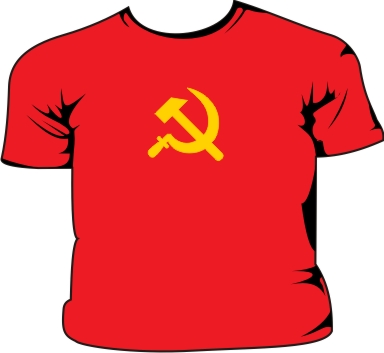
My first-grade son went to school on Tuesday wearing a regular pair of shorts, a Boston Red Sox shirt (atta boy!), his Sketchers, and a MarioKart backpack. He came home that afternoon in red overalls, this shirt, work boots, and a napsack that kind of looked like this. All he could talk about was revolution and the People (capital P) and something called "marks." Needless to say, his mother and I were very concerned, even outraged, but we weren't sure what was going on.

Then we saw this:


And we read this. And listened to this.

It soon became clear to us that Pres. Obama's speech to our youth was nothing more than Communist Propaganda. We immediately created a petition for our son's teacher, principal, and district superintendent to be fired. We will not allow the President of the United States to speak to our children! We will not allow a sense of patriotism to invade our schools and infect the hearts and minds of our nation's school children! No President is going to instill in my son a love for education and service to America! Fight!

Here are a few of the more overt and outrageous portions of President Obama's speech:
But at the end of the day, we can have the most dedicated teachers, the most supportive parents, the best schools in the world -- and none of it will make a difference, none of it will matter unless all of you fulfill your responsibilities, unless you show up to those schools, unless you pay attention to those teachers, unless you listen to your parents and grandparents and other adults and put in the hard work it takes to succeed. That's what I want to focus on today: the responsibility each of you has for your education.
Now please pick your jaws up off your keyboard. The steady indoctrination of personal responsibility that is a hallmark of communist thought pervades this speech. I imagine it is at this point that all of the backpacks were removed from the little hooks at the back of the room and replaced with new, soviet-style, napsacks.
Maybe you could be a great writer -- maybe even good enough to write a book or articles in a newspaper -- but you might not know it until you write that English paper -- that English class paper that's assigned to you. Maybe you could be an innovator or an inventor -- maybe even good enough to come up with the next iPhone or the new medicine or vaccine -- but you might not know it until you do your project for your science class. Maybe you could be a mayor or a senator or a Supreme Court justice -- but you might not know that until you join student government or the debate team.
Inspiring the youth to explore their potential is a typical socialist ploy meant to destroy their wills. In America we go to underperforming public schools, become crushed by health care costs, and lose our retirements and hope for a better future to greedy corporations. Don't mess my kid up with your fluffy dream talk.
But at the end of the day, the circumstances of your life -- what you look like, where you come from, how much money you have, what you've got going on at home -- none of that is an excuse for neglecting your homework or having a bad attitude in school. That's no excuse for talking back to your teacher, or cutting class, or dropping out of school. There is no excuse for not trying.
What you look like? Where you come from? What is he, racist?
The story of America isn't about people who quit when things got tough. It's about people who kept going, who tried harder, who loved their country too much to do anything less than their best.
What would President Obama know about the story of America? He wasn't even born in America. Plus, he's a Muslim.
So today, I want to ask all of you, what's your contribution going to be? What problems are you going to solve? What discoveries will you make? What will a President who comes here in 20 or 50 or 100 years say about what all of you did for this country?
Hopefully that future President will say that the contribution my son made was to resist the Obama propaganda machine. I can't believe that they showed this in my son's school. I'm literally sick to my stomach.

So, anyway, today we dressed our son in an American flag with a bald eagle backpack and told him to show that school what patriotism is really all about and refuse to listen to anything the President says, no matter how benign or universally acceptable.

Monday, September 7, 2009

Combating Extremism Abroad

There is a debate going on about how America should use information, propaganda, and humanitarian aid to combat extremism abroad. Reversing the tide of extremism worldwide is now the number one foreign policy goal of the Obama administration, and an important part of meeting that goal is to use information and diplomacy.

But Washington seems divided about whether to spread information and goods (such as messages of peace, mosquito nets, and bottled water) as overtly American or using the voice of the local people. In other words, is it in our best interests to advertise America as providing these goods and services and education, or would we see more positive results if those things were perceived to be coming from local organizations.

The argument for America stepping back and letting local voices speak for tolerance and peace, as opposed to our government making that case, is fairly persuasive. For one, America has a terrible reputation overseas right now, and anything coming out of Washington is viewed with skepticism and distrust. Pres. Obama is taking steps to mend broken fences, but it will take time. Often, then, people that would otherwise benefit from goods or see the virtues of our message of peace and democracy will reject it outright simply out of disdain for our country. There is therefore a threat of fostering more extremism through our perceived "meddling."

More fundamentally, however, it is important for people to hear the message of peace and tolerance from their peers. It resonates more. It seems to me that democracy and peace are more stable and long-lasting if they come from an organic process, like the American revolution, as opposed to coming by force, like in Iraq. When a nation takes ownership for its own destiny and raises up a generation of brave, freedom-loving patriots, its peace and freedom will be all the sweeter. America can nurture this organic process, but probably shouldn't be forcing it.

The other point is that it is more important for us to foster dislike of extremists than love for America. The point is to make America and Americans abroad safer, not to be everyone's best buddy. If we can be successful in encouraging nations such as Pakistan, Afghanistan, Libya, and the Sudan to reject extremists within their border, then perhaps a closer relationship with America will be a positive side-effect. But the goal is for those nations to voluntarily reject extremism, intolerance, and war.

One of the signs that more is needed to be done is the closing of the temple in Aba, Nigeria. This is a country that for years was one of the more stable African countries. There has recently been increased violence, however, even in the safe neighborhoods like the one the temple is in. Perhaps if America had been focusing on emergent nations such as Nigeria, that showed signs of enduring peace and freedom, instead of focusing efforts on a war with Iraq, we might have avoided Nigeria's deterioration.

Finally, I want to point people again to the talk by Elder Oaks, "World Peace." I think it provides excellent insight into how we, as members of the church, can promote peace. Sometimes it seems overwhelming to me. There are so many huge problems in the world that seem unsolvable. But Elder Oaks makes a simple statement: "The blessings of the gospel are universal, and so is the formula for peace: keep the commandments of God. War and conflict are the result of wickedness; peace is the product of righteousness."

Obviously we can't demand that America adopt the Gospel as its primary foreign policy tool. The Obama administration is doing what it can by promoting peace and stability behind the scenes. But we should be doing what we can, as members of the church, by living and spreading the Gospel. There are members of the church in hundreds of nations, and I really believe that where even a few members live the Gospel in an otherwise oppressive nation, peace and freedom can follow.

Friday, September 4, 2009

Firing Too Soon

This is a thought I've been having over the last few days. There were several times during the primaries when I felt like the Obama team wasn't doing enough. They seemed to just sit back and let things play out. At the time this unnerved me; although I like Hillary Clinton, I was still very supportive of Obama and I felt like doing this would let her get the upper hand. However, as we now know that didn't happen and Obama won the primary and the general election.

I think the same thing might be happening with health care. In some sense it's a good idea to draw out your opposition (especially when they're as numerically weak as the current Republican party) and let them take their best shot. August is over, and the memory of the town halls (or, rather, the minority that drew the most attention) will fade. I've noticed my more liberally-minded friends have now started to be more vocal about their support for a "public option" in whatever bill is finally passed, and whether they know it or not I think now is a good time to be more involved. One nice thing about the network news cycle is it doesn't last very long, so if you can ride out these media "waves" then you're likely to end up in a stronger position.

I don't claim to be a prognosticator for the Obama folks, and for all I know they're scrambling trying to figure out how to "respond" and not playing offense (the normal sort of reaction to these sorts of things). Nevertheless, I hold out hope that there is something of a larger strategy at work, and in my mind something like what I've described above could be effective against the Karl Rove-ish strategy of whisper campaigns and winning news cycles. If so, then I can't help but thing those who oppose the "public option" have fired too soon.

Tuesday, September 1, 2009

The Size and Role of Governments

It should be clear by this point that the debate over health care reform is less a debate about health care reform than it is a debate about the role of government in America. I hope that it is not a surprise for me to reveal that most liberals do not affirmatively want a large government, nor do they enjoy paying higher taxes. What we want is social justice and we think that the government sometimes in the best position to offer it.

My understanding of the conservative counter-argument is that individuals are capable of regulating themselves and society through the free market without government intrusion. With less government intervention, that means more money in people's pockets and a higher standard of living for all.

I get the feeling that some conservatives believe that many, if not most, liberals actually enjoy the government taxing us, we want a huge government, and we'll use excuses like health care and poverty to give the government more power. The specific program doesn't really matter, what matters is that we find a way to give the government more power. To the extent that any conservatives believe this, it is a strawman argument. Government can be the means, but it is never the ends.

I'm not sure how you can believe that corporate America acts in our best interests and promotes justice, equality, and stability. Go ahead and click 'em all. And remember, this is just the tip of the iceberg. Corporations are not in the game to help the consumer and society generally, they are in the game to make a profit. The side effects of corporate greed can be good for society and individuals, but not always. In fact, they do not have a track record that suggests we should trust them any more than the government, probably just the opposite.

Now, its widely accepted that greed is the engine driving capitalism. That greed, putting self-interest above all, spurs men and women to build up successful companies, innovate, and progress. Mainstream liberals agree with this notion and protect this way of life. Liberal has never meant anti-capitalist.

Liberals tend to see and emphasize, however, the inefficiencies of the free market. We see that the market does not always act rationally. We see that transactions are not always between parties of equal power who possess equal knowledge. We want to level the playing field for all participants, and this often means bringing down the rich and powerful a notch in order to raise up the poor and disenfranchised a notch. It means lower highs but higher lows. Its a trade-off that conservatives have a hard time accepting.

And I'll be honest, at times I have a hard time accepting it as well. In a parallel universe I could actually be a small-government-type. I'm not oblivious to the fact that taxes are getting higher, the government is getting bloated, and a small minority of people are leeches feeding on public welfare. I can see how a person would see this and want to reign it all in.

The problem is that we live in a world where people are filled with hate, greed, and prejudice. They will keep getting richer at the expense of the poor. They will pay women and minorities less because of they think they deserve less, and treat them worse because they think they deserve worse. Insurance companies, to use the example du jour, will deny coverage to those that need it most, delay coverage to those that require big expenses, and generally mess up the entire industry to make a buck.

I just don't think we live in a world where, if we want social justice, we can leave it all to private industry. The free market does not always act rationally, so we should foster and encourage industry and innovation, but we should be ready to step in and use the government where necessary. Does this mean socialism? No, of course not. Does it mean uncontrolled government spending? No. I hope Pres. Obama fulfills all of his campaign promises of health care reform, climate change legislation, and cutting out wasteful and inefficient government spending. That is exactly the type of agenda a liberal should endorse.

And I'm not exactly sure when the Mormon fixation on capitalism became so strong. For much of our early history capitalism was barely evident. From the law of consecration and the United Order, to Brigham Young's strongly pro-Mormon cooperative (to the exclusion of non-Mormon industry), ZCMI, the Church has a fairly deep history of non-capitalist economic institutions. Only when the members failed to live the higher law of collectivism, and with the increased contact and intermingling with non-Mormons, did capitalism become the de facto way of life.

Perhaps it was inevitable with an increasingly small world, and again I'm not saying we should be anti-capitalist, but so many Mormons are so staunchly free market that it makes me think we have forgotten our history altogether. I believe early Mormons balanced the competing ideals of the Individual and the Collective much better than we do today, with our laser-like focus on the Individual alone. Maybe I'm wrong.

Tuesday, August 25, 2009

Chris Buttars Needs A Nap

It has been too long since we have talked about Chris Buttars. That is an oversight on my part, which I am going to rectify now. Buttars is our most outspoken and prominent Utah legislator. He has a lot of anger in him and, what's more, a lot of confusion. We spent some time in the bizzare world of Chris Buttars here, here, and here.

Apparently, he doesn't like gays. So when Salt Lake City decides that it wants to pass an anti-discrimination law aimed at protecting the LGBT community, this makes Buttars angry. He wants to shut this down, even though he does not even live in Salt Lake City. Here is the oh-so predictable Buttars comment on this:
They want to say they're being hurt more than someone else, I guess. If anybody had a right to special protection it would be Mormons; they've been persecuted but not as bad as the American Indian. But they're not pounding on the newspaper's door. Or the Jewish people; the Jewish people have lots of people hate them. I love them. But you know that's true.
Let's break this down and see if we can make any sense of it. "They want to say they're being hurt more than someone else, I guess." This whole deal was started by factual reports of incidences of discrimination in the city. I'm not saying the LGBT community is like blacks facing down fire hoses in Alabama in the 1960's, but they actually are being hurt more than the general population for just being gay.

"If anybody had a right to special protection it would be Mormons." This is coming from a Utah legislator. I'm pretty sure that Mormons are doing just fine in Utah. For that matter, in the country as a whole. As a Mormon I am comfortable stating that I don't need any special protection. Now, if I was in Missouri or Illinois in the 1830's and 1840's, over 150 years ago, I might be asking for some protection. But Utah in the 2000's? I'm good, thanks.

"They've been persecuted but not as bad as the American Indian." The American Indian? What is even going on here? Where did that come from? I'm a little rattled.

"But they're not pounding on the newspaper's door." It's because the Mormons own the newspaper. If they pounded on the door it would be from the inside. Mormons went through their persecution decades and decades ago. Just because people don't trust our religion doesn't mean we are being persecuted. No one is denying us housing or hospital visitation or end-of-life decisionmaking. And I still don't know what American Indians have to do with anything.

"Or the Jewish people; the Jewish people have lots of people hate them." Now he's just rambling. Does he honestly not understand the difference between hate and discrimination? Is he just throwing out any group that might raise some emotion to distract from the fact that he is completely ill-equipped for the task of being a legislator? My money is on yes.

"I love them." Thanks for clearing that one up for us. We were all looking around trying to figure out why you hate Jews. Why does he need to let us know explicitly that he loves them? Is he self-conscious about his relationship with Jewish people? And I hope he realizes he's talking about a group of actual human beings, not just some amorphous philosophical idea that I kind of feel like it is trendy for some far-right conservatives to adopt now that Pres. Obama is taking a hard stand against Jewish settlements in the West Bank. But again, why even bring Jews into the conversation?

"But you know that's true." What? That you love Jewish people? That a lot of people hate Jews? That people persecute Mormons, but not as much as American Indians? That Mormons need protection more than gays? What is going here? How did this man get even a modicum of power and authority in this state?

You know who really needs protection, though? Belgians.

Friday, August 21, 2009

Getting Serious About Health Care Reform

I'm not a health insurance reform expert. Almost no one on earth is. That doesn't mean we can't talk about it. And I think that any discussion of insurance reform has to begin with the problems we are currently facing, because we can't find solutions to problems we only understand vaguely.

The biggest problem, of course, is that costs are increasing at an unsustainable rate. Premiums are rising at four times the rate of inflation and wages. National health expenditures are rising faster than GDP. Over the past ten years, premiums have more than doubled for the average family. Employers increasingly cannot afford adequate coverage, and the individual market for families is incredibly expensive.

There is also the problem of cherrypicking. The primary goal of the insurance companies is to make money. That is the nature of business in general. To maximize profits they only insure the healthiest people and they avoid paying for procedures, treatments, and medicine as much as is humanly possible. This means that those that need insurance most are least likely to get it, and those that have insurance are likely to be fought tooth and nail for using it. There are countless stories that illustrate this point.

There are nearly 50 million uninsured Americans, including nearly 10 million uninsured children.

So what we've got is a system that does not work. After decades of minimal regulation we are on the cusp of a system failure that would have serious consequences. Does this sound familiar? The difference between the insurance industry and the banking industry is that we allowed the banking system to basically fail, millions of people lost billions of dollars and retirement savings before we stepped in and put some serious regulation on the books. We simply cannot afford to let that happen in the insurance industry where more than just money is at stake.

From what I can glean from interwebs (and here are some articles I really like on more liberal side of things), Democratic health care reform has two main goals. The first is industry regulation. Here is where we address many of the problems that have slowly matriculated in the current system. Some examples are that insurance companies would not be able to deny consumers based on their medical history. Insurance companies would be required to set premiums based on community rating rather than experience rating. Under community rating, everyone would pay the same premiums, regardless of medical history, age, etc. Under experience rating, the current rating system, premiums are based on those and other factors. These reforms would create a much larger risk pool which would make health insurance affordable for many for whom it is not now.

The second part of health care reform seems to be a reform of the market itself. This is where the public option comes in. For all the new regulations that are being proposed, no one doubts that the incredibly rich and powerful and resourceful insurance industry will find ways to continue their current practices. Ambiguous language in the bill, bullying those without the means to fight back, delaying procedures for as long as possible, and the like are all ways that they can game the system. Regulation will be necessary and helpful, but it won't take us all the way. What's more, individual plans and small group plans will still cost more than large group plans because the administrative costs are higher and the risk is spread over a smaller group.

So a public option would combat those problems. It would provide a safety net for those that can't afford private insurance. It might resemble public/private choices like parcel service or education where there is a niche for both government run options and private options. If there were only ever private colleges and universities and suddenly the government decided to provide lower cost, competitive colleges and universities, would conservatives being calling it socialism? I kind of think they would. But no one is calling the current system socialist.

I don't think the public option for health insurance is all that different. The government subsidizes and runs education at all levels because we have deemed that education is so important that it should be provided to every citizen. In fact, education up to 12th grade is absolutely free for every citizen. Why is it so different for us, as Americans, to then say that adequate health care is so fundamentally important that we are going to make sure that every American has access to it? That is going to mean a market where there is competition between the government and private industry, but we are okay with that because it means that everyone has the peace of mind knowing that they have the means to deal with the sicknesses and injuries that their families will face.

I have said it before and I say it again now, this is a moral issue. I want to live in a nation where we make sure everyone, regardless of socio-economic situation, or any other factor, has access to adequate health care. Certainly it is better for our economy to have a more healthy, physically and mentally, workforce. But it is also good for our souls.

We are told again and again in the scriptures and through prophets to care for the sick and needy, the orphans and widows. In our modern world, health care is an essential part of that admonition. There is no way for us to individually make sure that the poor have health care, we have to do it as a group. I'm not saying that you have to support a public option to be a good Mormon or to keep the commandment to care for the poor, but it is a legitimate way to do so where no other viable option has been presented.