Wednesday, September 9, 2009

President Obama's Speech To Our Children

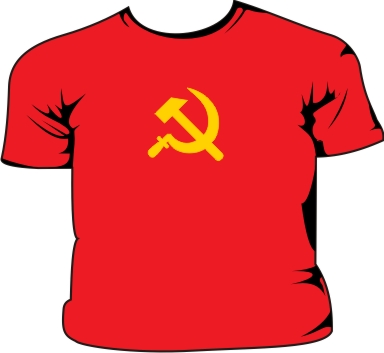
My first-grade son went to school on Tuesday wearing a regular pair of shorts, a Boston Red Sox shirt (atta boy!), his Sketchers, and a MarioKart backpack. He came home that afternoon in red overalls, this shirt, work boots, and a napsack that kind of looked like this. All he could talk about was revolution and the People (capital P) and something called "marks." Needless to say, his mother and I were very concerned, even outraged, but we weren't sure what was going on.

Then we saw this:


And we read this. And listened to this.

It soon became clear to us that Pres. Obama's speech to our youth was nothing more than Communist Propaganda. We immediately created a petition for our son's teacher, principal, and district superintendent to be fired. We will not allow the President of the United States to speak to our children! We will not allow a sense of patriotism to invade our schools and infect the hearts and minds of our nation's school children! No President is going to instill in my son a love for education and service to America! Fight!

Here are a few of the more overt and outrageous portions of President Obama's speech:
But at the end of the day, we can have the most dedicated teachers, the most supportive parents, the best schools in the world -- and none of it will make a difference, none of it will matter unless all of you fulfill your responsibilities, unless you show up to those schools, unless you pay attention to those teachers, unless you listen to your parents and grandparents and other adults and put in the hard work it takes to succeed. That's what I want to focus on today: the responsibility each of you has for your education.
Now please pick your jaws up off your keyboard. The steady indoctrination of personal responsibility that is a hallmark of communist thought pervades this speech. I imagine it is at this point that all of the backpacks were removed from the little hooks at the back of the room and replaced with new, soviet-style, napsacks.
Maybe you could be a great writer -- maybe even good enough to write a book or articles in a newspaper -- but you might not know it until you write that English paper -- that English class paper that's assigned to you. Maybe you could be an innovator or an inventor -- maybe even good enough to come up with the next iPhone or the new medicine or vaccine -- but you might not know it until you do your project for your science class. Maybe you could be a mayor or a senator or a Supreme Court justice -- but you might not know that until you join student government or the debate team.
Inspiring the youth to explore their potential is a typical socialist ploy meant to destroy their wills. In America we go to underperforming public schools, become crushed by health care costs, and lose our retirements and hope for a better future to greedy corporations. Don't mess my kid up with your fluffy dream talk.
But at the end of the day, the circumstances of your life -- what you look like, where you come from, how much money you have, what you've got going on at home -- none of that is an excuse for neglecting your homework or having a bad attitude in school. That's no excuse for talking back to your teacher, or cutting class, or dropping out of school. There is no excuse for not trying.
What you look like? Where you come from? What is he, racist?
The story of America isn't about people who quit when things got tough. It's about people who kept going, who tried harder, who loved their country too much to do anything less than their best.
What would President Obama know about the story of America? He wasn't even born in America. Plus, he's a Muslim.
So today, I want to ask all of you, what's your contribution going to be? What problems are you going to solve? What discoveries will you make? What will a President who comes here in 20 or 50 or 100 years say about what all of you did for this country?
Hopefully that future President will say that the contribution my son made was to resist the Obama propaganda machine. I can't believe that they showed this in my son's school. I'm literally sick to my stomach.

So, anyway, today we dressed our son in an American flag with a bald eagle backpack and told him to show that school what patriotism is really all about and refuse to listen to anything the President says, no matter how benign or universally acceptable.

Monday, September 7, 2009

Combating Extremism Abroad

There is a debate going on about how America should use information, propaganda, and humanitarian aid to combat extremism abroad. Reversing the tide of extremism worldwide is now the number one foreign policy goal of the Obama administration, and an important part of meeting that goal is to use information and diplomacy.

But Washington seems divided about whether to spread information and goods (such as messages of peace, mosquito nets, and bottled water) as overtly American or using the voice of the local people. In other words, is it in our best interests to advertise America as providing these goods and services and education, or would we see more positive results if those things were perceived to be coming from local organizations.

The argument for America stepping back and letting local voices speak for tolerance and peace, as opposed to our government making that case, is fairly persuasive. For one, America has a terrible reputation overseas right now, and anything coming out of Washington is viewed with skepticism and distrust. Pres. Obama is taking steps to mend broken fences, but it will take time. Often, then, people that would otherwise benefit from goods or see the virtues of our message of peace and democracy will reject it outright simply out of disdain for our country. There is therefore a threat of fostering more extremism through our perceived "meddling."

More fundamentally, however, it is important for people to hear the message of peace and tolerance from their peers. It resonates more. It seems to me that democracy and peace are more stable and long-lasting if they come from an organic process, like the American revolution, as opposed to coming by force, like in Iraq. When a nation takes ownership for its own destiny and raises up a generation of brave, freedom-loving patriots, its peace and freedom will be all the sweeter. America can nurture this organic process, but probably shouldn't be forcing it.

The other point is that it is more important for us to foster dislike of extremists than love for America. The point is to make America and Americans abroad safer, not to be everyone's best buddy. If we can be successful in encouraging nations such as Pakistan, Afghanistan, Libya, and the Sudan to reject extremists within their border, then perhaps a closer relationship with America will be a positive side-effect. But the goal is for those nations to voluntarily reject extremism, intolerance, and war.

One of the signs that more is needed to be done is the closing of the temple in Aba, Nigeria. This is a country that for years was one of the more stable African countries. There has recently been increased violence, however, even in the safe neighborhoods like the one the temple is in. Perhaps if America had been focusing on emergent nations such as Nigeria, that showed signs of enduring peace and freedom, instead of focusing efforts on a war with Iraq, we might have avoided Nigeria's deterioration.

Finally, I want to point people again to the talk by Elder Oaks, "World Peace." I think it provides excellent insight into how we, as members of the church, can promote peace. Sometimes it seems overwhelming to me. There are so many huge problems in the world that seem unsolvable. But Elder Oaks makes a simple statement: "The blessings of the gospel are universal, and so is the formula for peace: keep the commandments of God. War and conflict are the result of wickedness; peace is the product of righteousness."

Obviously we can't demand that America adopt the Gospel as its primary foreign policy tool. The Obama administration is doing what it can by promoting peace and stability behind the scenes. But we should be doing what we can, as members of the church, by living and spreading the Gospel. There are members of the church in hundreds of nations, and I really believe that where even a few members live the Gospel in an otherwise oppressive nation, peace and freedom can follow.

Friday, September 4, 2009

Firing Too Soon

This is a thought I've been having over the last few days. There were several times during the primaries when I felt like the Obama team wasn't doing enough. They seemed to just sit back and let things play out. At the time this unnerved me; although I like Hillary Clinton, I was still very supportive of Obama and I felt like doing this would let her get the upper hand. However, as we now know that didn't happen and Obama won the primary and the general election.

I think the same thing might be happening with health care. In some sense it's a good idea to draw out your opposition (especially when they're as numerically weak as the current Republican party) and let them take their best shot. August is over, and the memory of the town halls (or, rather, the minority that drew the most attention) will fade. I've noticed my more liberally-minded friends have now started to be more vocal about their support for a "public option" in whatever bill is finally passed, and whether they know it or not I think now is a good time to be more involved. One nice thing about the network news cycle is it doesn't last very long, so if you can ride out these media "waves" then you're likely to end up in a stronger position.

I don't claim to be a prognosticator for the Obama folks, and for all I know they're scrambling trying to figure out how to "respond" and not playing offense (the normal sort of reaction to these sorts of things). Nevertheless, I hold out hope that there is something of a larger strategy at work, and in my mind something like what I've described above could be effective against the Karl Rove-ish strategy of whisper campaigns and winning news cycles. If so, then I can't help but thing those who oppose the "public option" have fired too soon.

Tuesday, September 1, 2009

The Size and Role of Governments

It should be clear by this point that the debate over health care reform is less a debate about health care reform than it is a debate about the role of government in America. I hope that it is not a surprise for me to reveal that most liberals do not affirmatively want a large government, nor do they enjoy paying higher taxes. What we want is social justice and we think that the government sometimes in the best position to offer it.

My understanding of the conservative counter-argument is that individuals are capable of regulating themselves and society through the free market without government intrusion. With less government intervention, that means more money in people's pockets and a higher standard of living for all.

I get the feeling that some conservatives believe that many, if not most, liberals actually enjoy the government taxing us, we want a huge government, and we'll use excuses like health care and poverty to give the government more power. The specific program doesn't really matter, what matters is that we find a way to give the government more power. To the extent that any conservatives believe this, it is a strawman argument. Government can be the means, but it is never the ends.

I'm not sure how you can believe that corporate America acts in our best interests and promotes justice, equality, and stability. Go ahead and click 'em all. And remember, this is just the tip of the iceberg. Corporations are not in the game to help the consumer and society generally, they are in the game to make a profit. The side effects of corporate greed can be good for society and individuals, but not always. In fact, they do not have a track record that suggests we should trust them any more than the government, probably just the opposite.

Now, its widely accepted that greed is the engine driving capitalism. That greed, putting self-interest above all, spurs men and women to build up successful companies, innovate, and progress. Mainstream liberals agree with this notion and protect this way of life. Liberal has never meant anti-capitalist.

Liberals tend to see and emphasize, however, the inefficiencies of the free market. We see that the market does not always act rationally. We see that transactions are not always between parties of equal power who possess equal knowledge. We want to level the playing field for all participants, and this often means bringing down the rich and powerful a notch in order to raise up the poor and disenfranchised a notch. It means lower highs but higher lows. Its a trade-off that conservatives have a hard time accepting.

And I'll be honest, at times I have a hard time accepting it as well. In a parallel universe I could actually be a small-government-type. I'm not oblivious to the fact that taxes are getting higher, the government is getting bloated, and a small minority of people are leeches feeding on public welfare. I can see how a person would see this and want to reign it all in.

The problem is that we live in a world where people are filled with hate, greed, and prejudice. They will keep getting richer at the expense of the poor. They will pay women and minorities less because of they think they deserve less, and treat them worse because they think they deserve worse. Insurance companies, to use the example du jour, will deny coverage to those that need it most, delay coverage to those that require big expenses, and generally mess up the entire industry to make a buck.

I just don't think we live in a world where, if we want social justice, we can leave it all to private industry. The free market does not always act rationally, so we should foster and encourage industry and innovation, but we should be ready to step in and use the government where necessary. Does this mean socialism? No, of course not. Does it mean uncontrolled government spending? No. I hope Pres. Obama fulfills all of his campaign promises of health care reform, climate change legislation, and cutting out wasteful and inefficient government spending. That is exactly the type of agenda a liberal should endorse.

And I'm not exactly sure when the Mormon fixation on capitalism became so strong. For much of our early history capitalism was barely evident. From the law of consecration and the United Order, to Brigham Young's strongly pro-Mormon cooperative (to the exclusion of non-Mormon industry), ZCMI, the Church has a fairly deep history of non-capitalist economic institutions. Only when the members failed to live the higher law of collectivism, and with the increased contact and intermingling with non-Mormons, did capitalism become the de facto way of life.

Perhaps it was inevitable with an increasingly small world, and again I'm not saying we should be anti-capitalist, but so many Mormons are so staunchly free market that it makes me think we have forgotten our history altogether. I believe early Mormons balanced the competing ideals of the Individual and the Collective much better than we do today, with our laser-like focus on the Individual alone. Maybe I'm wrong.

Tuesday, August 25, 2009

Chris Buttars Needs A Nap

It has been too long since we have talked about Chris Buttars. That is an oversight on my part, which I am going to rectify now. Buttars is our most outspoken and prominent Utah legislator. He has a lot of anger in him and, what's more, a lot of confusion. We spent some time in the bizzare world of Chris Buttars here, here, and here.

Apparently, he doesn't like gays. So when Salt Lake City decides that it wants to pass an anti-discrimination law aimed at protecting the LGBT community, this makes Buttars angry. He wants to shut this down, even though he does not even live in Salt Lake City. Here is the oh-so predictable Buttars comment on this:
They want to say they're being hurt more than someone else, I guess. If anybody had a right to special protection it would be Mormons; they've been persecuted but not as bad as the American Indian. But they're not pounding on the newspaper's door. Or the Jewish people; the Jewish people have lots of people hate them. I love them. But you know that's true.
Let's break this down and see if we can make any sense of it. "They want to say they're being hurt more than someone else, I guess." This whole deal was started by factual reports of incidences of discrimination in the city. I'm not saying the LGBT community is like blacks facing down fire hoses in Alabama in the 1960's, but they actually are being hurt more than the general population for just being gay.

"If anybody had a right to special protection it would be Mormons." This is coming from a Utah legislator. I'm pretty sure that Mormons are doing just fine in Utah. For that matter, in the country as a whole. As a Mormon I am comfortable stating that I don't need any special protection. Now, if I was in Missouri or Illinois in the 1830's and 1840's, over 150 years ago, I might be asking for some protection. But Utah in the 2000's? I'm good, thanks.

"They've been persecuted but not as bad as the American Indian." The American Indian? What is even going on here? Where did that come from? I'm a little rattled.

"But they're not pounding on the newspaper's door." It's because the Mormons own the newspaper. If they pounded on the door it would be from the inside. Mormons went through their persecution decades and decades ago. Just because people don't trust our religion doesn't mean we are being persecuted. No one is denying us housing or hospital visitation or end-of-life decisionmaking. And I still don't know what American Indians have to do with anything.

"Or the Jewish people; the Jewish people have lots of people hate them." Now he's just rambling. Does he honestly not understand the difference between hate and discrimination? Is he just throwing out any group that might raise some emotion to distract from the fact that he is completely ill-equipped for the task of being a legislator? My money is on yes.

"I love them." Thanks for clearing that one up for us. We were all looking around trying to figure out why you hate Jews. Why does he need to let us know explicitly that he loves them? Is he self-conscious about his relationship with Jewish people? And I hope he realizes he's talking about a group of actual human beings, not just some amorphous philosophical idea that I kind of feel like it is trendy for some far-right conservatives to adopt now that Pres. Obama is taking a hard stand against Jewish settlements in the West Bank. But again, why even bring Jews into the conversation?

"But you know that's true." What? That you love Jewish people? That a lot of people hate Jews? That people persecute Mormons, but not as much as American Indians? That Mormons need protection more than gays? What is going here? How did this man get even a modicum of power and authority in this state?

You know who really needs protection, though? Belgians.

Friday, August 21, 2009

Getting Serious About Health Care Reform

I'm not a health insurance reform expert. Almost no one on earth is. That doesn't mean we can't talk about it. And I think that any discussion of insurance reform has to begin with the problems we are currently facing, because we can't find solutions to problems we only understand vaguely.

The biggest problem, of course, is that costs are increasing at an unsustainable rate. Premiums are rising at four times the rate of inflation and wages. National health expenditures are rising faster than GDP. Over the past ten years, premiums have more than doubled for the average family. Employers increasingly cannot afford adequate coverage, and the individual market for families is incredibly expensive.

There is also the problem of cherrypicking. The primary goal of the insurance companies is to make money. That is the nature of business in general. To maximize profits they only insure the healthiest people and they avoid paying for procedures, treatments, and medicine as much as is humanly possible. This means that those that need insurance most are least likely to get it, and those that have insurance are likely to be fought tooth and nail for using it. There are countless stories that illustrate this point.

There are nearly 50 million uninsured Americans, including nearly 10 million uninsured children.

So what we've got is a system that does not work. After decades of minimal regulation we are on the cusp of a system failure that would have serious consequences. Does this sound familiar? The difference between the insurance industry and the banking industry is that we allowed the banking system to basically fail, millions of people lost billions of dollars and retirement savings before we stepped in and put some serious regulation on the books. We simply cannot afford to let that happen in the insurance industry where more than just money is at stake.

From what I can glean from interwebs (and here are some articles I really like on more liberal side of things), Democratic health care reform has two main goals. The first is industry regulation. Here is where we address many of the problems that have slowly matriculated in the current system. Some examples are that insurance companies would not be able to deny consumers based on their medical history. Insurance companies would be required to set premiums based on community rating rather than experience rating. Under community rating, everyone would pay the same premiums, regardless of medical history, age, etc. Under experience rating, the current rating system, premiums are based on those and other factors. These reforms would create a much larger risk pool which would make health insurance affordable for many for whom it is not now.

The second part of health care reform seems to be a reform of the market itself. This is where the public option comes in. For all the new regulations that are being proposed, no one doubts that the incredibly rich and powerful and resourceful insurance industry will find ways to continue their current practices. Ambiguous language in the bill, bullying those without the means to fight back, delaying procedures for as long as possible, and the like are all ways that they can game the system. Regulation will be necessary and helpful, but it won't take us all the way. What's more, individual plans and small group plans will still cost more than large group plans because the administrative costs are higher and the risk is spread over a smaller group.

So a public option would combat those problems. It would provide a safety net for those that can't afford private insurance. It might resemble public/private choices like parcel service or education where there is a niche for both government run options and private options. If there were only ever private colleges and universities and suddenly the government decided to provide lower cost, competitive colleges and universities, would conservatives being calling it socialism? I kind of think they would. But no one is calling the current system socialist.

I don't think the public option for health insurance is all that different. The government subsidizes and runs education at all levels because we have deemed that education is so important that it should be provided to every citizen. In fact, education up to 12th grade is absolutely free for every citizen. Why is it so different for us, as Americans, to then say that adequate health care is so fundamentally important that we are going to make sure that every American has access to it? That is going to mean a market where there is competition between the government and private industry, but we are okay with that because it means that everyone has the peace of mind knowing that they have the means to deal with the sicknesses and injuries that their families will face.

I have said it before and I say it again now, this is a moral issue. I want to live in a nation where we make sure everyone, regardless of socio-economic situation, or any other factor, has access to adequate health care. Certainly it is better for our economy to have a more healthy, physically and mentally, workforce. But it is also good for our souls.

We are told again and again in the scriptures and through prophets to care for the sick and needy, the orphans and widows. In our modern world, health care is an essential part of that admonition. There is no way for us to individually make sure that the poor have health care, we have to do it as a group. I'm not saying that you have to support a public option to be a good Mormon or to keep the commandment to care for the poor, but it is a legitimate way to do so where no other viable option has been presented.

Wednesday, August 19, 2009

Democracy is Action

Reward Good Behavior

It's a shame that our current political system relies as much as it does on money. Thankfully, though, there are ways now to make your money talk much more than it could before sites like Act Blue (or Red) existed. This is one of those times when a bit of talking money could amount to a shout; as Nate Silver demonstrates, Insurance Company money can play a large role in influencing Senators from smaller states who may not have a large, independent donor base. Showing them (by contributing to the good guys) that there is money out there for people who behave well is one of the strongest signals we can send in this environment. In fact, I think the days of wholly-owned Senators may be drawing to a close due to these sorts of democratic ways to give money. We're not there yet, but the "people" already bought a President (he raised $342 million from donors who gave under $1000 total to the campaign).

Thursday, August 13, 2009

Healthcare Debate in the Infortainment Age

I think I understand a little bit about political outrage. I lived through the Bush years where my opinion was that the Iraq War was unjustified, that the government illegally spied on its own citizens through warrantless wiretaps, that our government engaged in despicable torture, and on and on. So I have a pretty solid history, along with other liberals, of feelings of anger directed towards our government. The beauty of America is that we can disagree, feel outrage, and argue the merits, all while feeling safe from oppression and remaining friends with those with whom we disagree.

What I can't understand and accept are lies and intimidation. Those are anti-democratic. And those are now the preferred tactics of the right on the healthcare debate. Andrew posted a great link that gave a taste of the lies being spread by the anti-healthcare reform activists, and how easy they are to debunk. Some of the more prominent lies are that there will be a bureaucratic death panel which, I guess, decides who gets treatment and who dies, government-sponsored euthanasia, and bureaucratic boards which decide which kind of healthcare you will receive. These are all lies, and they are firing up the conservative base.

The lies alone are bad enough, but now conservatives are showing up at townhall meetings and being disruptive and intimidating. They are shouting down anyone that disagrees with them. Here are some examples:


There is also the great picture on the front page of the New York Times of the heckler right in Arlen Spector's face.

This is as distasteful as it is anti-democratic, and I think it is a product of two problems that we face that are interrelated. First, this is the inevitable byproduct of the Information Age: 24-hour news channels, internet, Twitter, etc. In the mad dash to compete in this new market, news outlets must fill hours and hours, and pages and pages, of open space with something, anything, that viewers and readers might find interesting. So what we get is hours and hours and pages and pages of excruciating minutia and over-analysis.

And because the news outlets simply can't fill up all that open space with actual news, in all its boring and staid glory, the line between news and entertainment is so blurred it doesn't even exist anymore. The Information Age is now the Entertainment Age. We have to be constantly entertained, outraged, moved to fear or tears, in order to be satisfied.

Which leads to the second big problem: a lack of critical thinking. We rarely have time to sit and reflect anymore, to think through issues on our own, to remove ourselves from the ever-present hum of infortainment and take an objective look. We are spoon-fed (actually shovel-fed) everything we need and we no longer take the time to prepare our own meals.

We are urged as a church to be self-sufficient in our temporal concerns. We should have food storage, money in savings, little or no debt, grow a garden. But are we also self-sufficient in our ability to analyze the world and inform our opinions? Would we really have the same opinions and passions if CNN, MSNBC, and Fox, all stopped broadcasting? Has the Infortainment Age created a world of extremism? I'm not smart enough to answer these questions.

King Mosiah in the Book of Mormon taught us:
And see that all these things are done in wisdom and order; for it is not requisite that a man should run faster than he has strength. And again, it is expedient that he should be diligent, that thereby he might win the prize; therefore, all things must be done in order.
The Lord in Doctrine and Covenants taught us: "yea, seek ye out of the best books words of wisdom; seek learning, even by study and also by faith."

I think we would all do better to apply these scriptures to the Infortainment Age. To slow down the amount of input in our lives, but diligently seek truth through reading, study, and faith, as opposed to TV, internet, and radio. Maybe if we did we would find that we treasure our commonalities and kinship more than our differences. We would also likely all be liberals.

The healthcare debate is just one symptom of this problem. We are being fed gross lies and stirred up to anger and outrage by the infortainers who want nothing more than ratings and power. We certainly have disagreements, but these could be dealt with with respect and tact if we only took time to be a little more discerning in our personal filters.

The Mormon Left is as guilty as anyone, but this whole healthcare debate, with its screaming and lies and intimidation and overreactions, has opened my eyes a little bit. This is not healthy discussion and this is not democracy in action. This is kind of scary.

Wednesday, August 12, 2009

Snopes-ing Health Care Zombie Lies

http://www.politifact.com/truth-o-meter/article/2009/jul/30/e-mail-analysis-health-bill-needs-check-/

Republican lies about health care don't just appear out of the ether (although it seems they do sometimes), they're often disseminated through various chain emails. Like Nigerian scams or online pharmacy ads. And they're about as useful, in fact I wouldn't be surprised if many of the recipients get added to junk-mail lists. If I harvested email addresses for a living this would be a great way to do it, since people mindlessly (or not) forward stuff like this to their friends all the time. So the next time you hear some crazy weird thing about the "Obama" (I put that in quotes, because the White House hasn't authored any of the current health care bills making the rounds in Congress) health care plan, you know where it comes from.

Saturday, August 8, 2009

Mormons : America :: Catholic Monks : Rome

Recently at Slate.com, there was a series of articles which played out the thought experiment of how America may come to end in the near or distant future. Towards the end of this series the author speculated on who or what would carry the spirit and ideals of America forward like Catholic monks did with Rome. His conclusion: the Mormons.

There were several reasons. First, Mormons might be more likely to survive the collapse of America because of our commitment to food storage and our actively watching for the apocalypse. Second, Mormons believe that America was divinely appointed and inspired, and are therefore more likely to carry on its ideals and traditions, maybe even revering the Constitution after America is no more. Third, Mormons represent American values because we have been forced to assimilate to American culture after years of being outcasts and persecuted. In other words, we have worked very hard to fit in and seem normal after a pretty rocky start. Fourth, Mormons have fully embraced capitalism. Fifth, Mormons are always looking to the past as a source of strength. Not being too caught up in the present or future is good for survival in harsh conditions. Finally, Americans represent good old fashioned American values like family, civic responsibility, and the like.

This makes me uncomfortable for several reasons. I think like most Mormons, I tend to discount the point of view that says that Mormonism is a uniquely American religion. Of course we believe that Gospel truths are universal and eternal, applying equally to all nations and people. I understand, however, where this point of view comes from. It is true that the church was founded (or restored) here in America, that the Book of Mormon goes out of its way to extol the virtues of America and its founding, that modern revelation has pinpointed the spot of the Garden of Eden and New Jerusalem here in America, and the headquarters are in America. That is fairly persuasive evidence that this is an American religion.

And it is true that the American culture that dominates Mormonism pervades congregations throughout the world. Non-English speakers use English words in regards to Mormonism (for instance, many French speakers use the word "garments" and "Elder" even though those words either don't exist or are not used in such a way in French) and foreign members of the church tend to exhibit America-philia in their desire to visit America or move here. I don't think the church explicitly encourages such America-centrism, but its hard to argue that it does not exist on some level.

But the main point of the article and what I was interested in, was the way in which Mormons have gone out of our way to assimilate into American society to the point that we are regarded as the best single example of the confluence of America and religion. Has it made a positive difference in our religion that we are trying very hard to fit it?

On the one hand state and federal governments have ceased sending armed mobs and militias to take our property and change our religious practices, but on the other hand Americans are still deeply suspicious of our religion and really don't trust us. Are we trying too hard to be seen as quintessentially "American" at the expense of some of our core ideals for very little in return?

It used to be that one of the distinguishing features of Mormonism was the emphasis on community. Of course there was the United Order, but there were also various other community activities and community pride. For a good look at this phenomenon read Wallace Stegner's Mormon Country. I think that has been completely lost. We pride ourselves in our big houses on our big lots and our capitalism and our Western-style individualism. I don't think there is anything wrong with those those, in moderation, but it feels like we've gone too far and maybe a lot of it has to do, ironically I guess, with our desire to assimilate and seem "normal."

Perhaps, as well, this has something to do with Mormon politics. This extreme identity with conservative politics which only loosely coincides with Mormon beliefs allows an outlet for the majority of Mormons to enter the national discourse via a mainstream political vehicle. What have they gotten in return? A Southern base that distrusts Mormons and would not consider nominating a Mormon for President.

I would hope that members of the church identify themselves as Mormons first and Americans, democrats, or republicans following after. Not because there is anything grossly wrong with America, but because a nation is manmade and transitory, whereas our religion is eternal. A nation, any nation, is inherently flawed and limited, which is not the case with the Gospel.

I would hope that we could find the beauty and wisdom in all cultures instead of puffing our American chests and sneering at what we see as inferior nations, especially knowing that members of the church come from nearly all cultures and nations (even Muslim nations).

So I don't feel bad admitting that the fact that people see us as the very epitome of American culture makes me uncomfortable.

Wednesday, August 5, 2009

A quick assessment of Obama thus far

A few thoughts about how things are going so far:

1.) No foreign terrorist attacks yet on U.S. soil. Apparently they're not aware that even our President objectively supports their cause.

2.) I like having someone in charge who can speak in front of real people, instead of a hand-picked audience or a press pool whose questions are pre-approved.

3.) Birthers! You guys rock, keep the craziness coming.

4.) I am not surprised that politics continues to be messy.

5.) No effective Republican opposition in sight. Aside from the newsiness of the "protests" bought and paid for by various PACS (I'll definitely be attending my congressman's Health Care roundtable to show my support), there is no coherent message (unless "no" is a message) worth caring about.

6.) While I'm still wary of the stimulus package (a good bout of real reform would have been nice, Wall Street got off way too easy), I think most of its provisions will have a positive (or, at worst a neutral) impact on the economy. Way better than Bush's refusal to even acknowledge that we had a problem.

7.) I am quite pleased with how Obama has handled things internationally. While most domestic opposition has focused on the Health Care debate and the next Supreme Court justice Sonia Sotomayor, quietly in the background the Administration's been making all the right noises (even going so far as to actually apply pressure to Israel, instead of caving to every whim of Zionist craziness).

8.) We haven't bombed anyone who we weren't already bombing. IMHO that's great news; we were headed towards a possibly disastrous confrontation with Iran and who knows whom else.

9.) He's been extremely busy. No weekends at the ranch (Bush took more days off than any other President in history).

10.) I'm still very happy that I voted for him. He is, in retrospect, far better than either a.) any of the Republican candidates, or b.) any of his challengers in the Primaries (and I was a fairly dedicated Edwards man then). I don't expect perfection out of politicians, I'm just glad that this one functions mostly correctly.

Wednesday, July 29, 2009

Glenn Beck: Mormon, Sadly

There is really nothing more to say about Glenn Beck. He is soulless. His every word is carefully chosen to illicit astonished reactions. But I'll take the bait and we'll discuss him here because, sadly, he is "Mormon." His latest erudite and intelligent bit of commentary is that he thinks Pres. Obama is racist:


Pres. Obama has a deep-seated hatred for white people and white culture. But he's not saying Pres. Obama doesn't like white people. But Pres. Obama is a racist. So it appears, in Glenn Beck's mind, that racism and hatred of white people and white culture are not the same thing as not liking white people. You can be one and not the other.

First, I'd love to know what white culture is. If anyone can define it, please step forward. But it sounds a little too much like white supremacy to me.

Second, Barack Obama is half-white. His mother is white. Half his family is white. His grandmother, who he talked about often, is white. As noted in the video, his presidential campaign was run by white people and his White House is run by a white man.

But Pres. Obama made a comment about a black man getting arrested in a white neighborhood, so Beck says Obama is a racist and has deep-seated hatred for white people. I don't know if Beck actually believes stuff like this that he says, I tend to think he does, but it doesn't matter. What Glenn Beck really thinks is that calling Pres. Obama a racist will be good for ratings. He knows he has a base of listeners who are ultra-conservative, angry, white, and easily agitated, and he plays to those people.

What Beck doesn't get, tragically, is that there are consequences to such hateful and vilifying speech. We live in a nation, fortunately, and I mean that, where you can call the President a racist. Plenty of people called Pres. Bush stupid, and as far as I know none of those people were waterboarded or tortured in any way. But its not as easy as just shouting "FREEDOM OF SPEECH! FREEDOM OF SPEECH!" anytime someone calls you out for your awful and offensive speech. We also live in a society where we try to be tolerant and peaceful and intelligent, and speech like Beck's only lowers our nation's level of discourse, breeds hate and intolerance, and can lead to real violence. Now, if Beck was just generally inane and insufferable but did not have a history of hate-filled and violent rhetoric, his Obama-racist comment would be forgotten and/or ignored. But that's not the case.

Glenn Beck said that stem cell research will lead to Eugenics and another holocaust. You don't think someone could hear that and decide to stop it at all costs? Glenn Beck espouses traitorous secession when you disagree with the President politically. You don't think someone could hear that and start something nasty? Glenn Beck said that his political opponents were vampires and that the only way to stop them is to drive a stake through their hearts. You don't think someone could hear that and react violently? Glenn Beck said he hates, "hates," the victims of Hurricane Katrina and 9/11. Glenn Beck demanded that the first ever Muslin Congressman "prove to me that you are not working with our enemies." Glenn Beck accuses Pres. Obama of leading the nation to socialism. Glenn Beck called Pres. Obama a communist. Glenn Beck (this link is a doozy) called Rosie O'Donnell a "fat witch," called Hillary Clinton a "stereotypical bitch," called countries from where immigrants are coming to the United States "dirtbag countr[ies]," made fun of Braille, said that we need to be "in the recruitment office lining up to shoot the bad Muslims in the head," called Cindy Sheehan, whose son died in Iraq and who became an anti-war protester, "a pretty big prostitute," and on and on and on and on.

If he had said just one of these things, and somebody internalized it and did something violent, we certainly couldn't look back at Beck and accuse him of having blood on his hands. But when he spews hate speech as consistently and radically as he does, when the time comes, which is inevitable, that one or more of his listeners acts on these hateful feelings and ideas, Beck will be guilty. He can say whatever he wants, but when the words turn to actual violence, he'll be guilty.

The big problem, though, and what this blog is particularly concerned about, is that Glenn Beck is Mormon. Do you suppose that Beck could go from his radio show where he calls Hilary Clinton a stereotypical bitch, or a grieving mother/anti-war activist a big prostitute, directly to the temple and feel good about that? Do you suppose he could be in the foyer after sacrament meeting and call the nations directly to the south of America, where the church is growing exponentially, dirtbags as a Honduran walks by, and feel good about that?

And it's not like I'm trying to divine the intent of his heart, he purposefully and publicly made these and many other statements just like them for all to hear.

But because he is "Mormon" and conservative, he is treated like a General Authority. Check out the comments section to the Deseret News article, "Question: Is Glenn Beck a Mormon?" Members of the church revere him. They will defend him at all costs. They take his word as gospel, all because he is a prominent "Mormon" conservative commentator/entertainer. It sickens me. He is a terrible, terrible, example of Mormonism. He is affirmatively bad for our church, and I don't want his crying, hateful face associated with my religion.